Red Flags & Sacred Texts (Part 1)
Secret ManusCripts of Mali. (part 1)
“Trust in God — But Tie Your Camel.” A Sufi Saying
We’d been slowed by Bamako traffic – no lanes, no lights, just a river of vehicles negotiating forward one inch at a time. Women walked with silver basins balanced on their heads. Young men sold SIM cards and mangoes at intersections. Diesel fumes mixed with roasting peanuts. I watched it all pass like an unfinished thought.
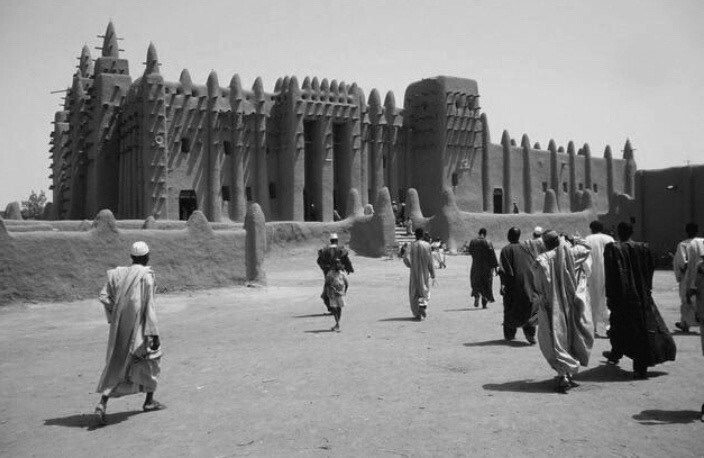
By the time we reached the Grand Mosque, the morning service had ended, but the place was still alive – men talking quietly under the arches, children playing in the shade, a few dozen pairs of sandals still lined up neatly at the threshold like a still life we’ve seen before.
It wasn’t the scene I’d imagined, but there was enough left to catch. Laurent and I set up the camera. A group of six boys surrounded us. Asking for candy.
Back home, I’d begun to teach myself about the subject of this project: the secret manuscripts.
I asked the producer – carefully: “Thoughts on where they are?”
“Yes, yes. They’re nearby.” Valery said, which could mean anything.
That had become a pattern. Even my softest questions – Do we have time? Are there permissions? – seemed to land as if I were doubting the whole enterprise. Maybe I was. But I was also trying to help steer the ship, or at least make sure we had patches for the visible leaks.
Eventually someone arrived – someone vaguely affiliated, it seemed. We shot what we could. Those few kids. A pan of the courtyard. The inevitable close-up of shoes on the steps – half cliché, half insurance policy. Just enough to say we were there.
At one point, we stepped just inside the doorway. The light shifted – cooler, quieter. A few men still lingered in prayer, their backs to us. But even with our shoes off, we felt like intruders. Eyes met ours – briefly, firmly. Not angry exactly but guarded. Protective. It was enough. We backed out slowly, murmured apologies, and returned to the outer courtyard. Some doors, it turns out, don’t need to be closed to be understood.
We wrapped quickly. No one said much. Everyone was suddenly tired. We packed up and drove off without a word glad we hadn’t caused an international incident.
On the Drive Back
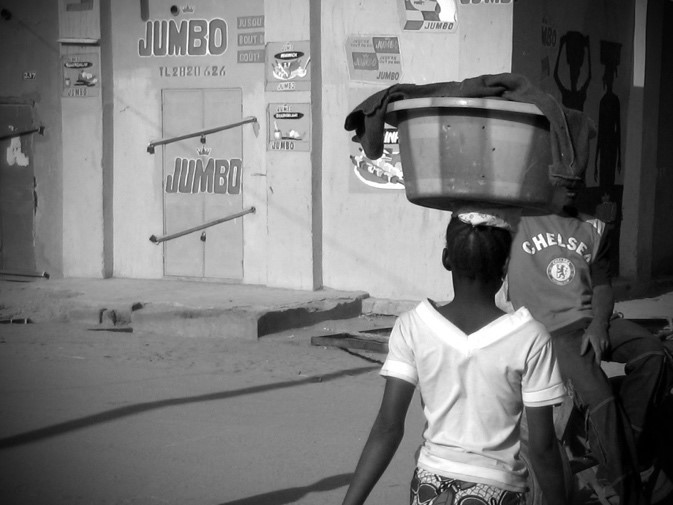
We passed those women in long patterned dresses carrying stacks of bread on their heads. Boys kicking a plastic bottle like a soccer ball. Men in crisp white robes kneeling on rugs that barely cleared the sidewalk. Dust. Color. Movement. A raw kind of grace. I stared out the window and tried to breathe it all in.
And yet, somewhere beneath the beauty, the doubt returned.
I found myself hesitating again – holding back questions I would’ve asked on any other shoot. Things like, “Do we have something for the afternoon?” Simple stuff. Not: What is the actual story here?
But even those softball questions had a way of changing the temperature in the room. Everyone got quiet. Defensive. Like my asking made things worse. So I stopped. I watched instead. And hoped we weren’t just making a travelogue with expensive gear.
The Arrival
When we got back to the hotel, Issa was waiting. With him stood a quiet man in a long robe, holding something wrapped in cloth.
We followed them into the shaded courtyard. The man placed the bundle on the table and began to unfold it – slowly, deliberately, like opening a prayer.
Journal
Inside was one of the manuscripts. Handwritten pages, delicate and dark, edged with gold and time. The ink still held its shape. The paper trembled slightly in the warm breeze.
No one spoke.
I didn’t reach for the camera. Not yet. I just looked out of respect.
It was the first moment since we’d arrived that felt true.
What the Film Was Meant to Be
I pointed to a spot on the page and asked the man what it said.
“These here are like poems,” he said. “This one is a letter of advice from father to son warning against – how do you say – “pride.”
OMG, I thought: I wish my father had advised me about that!
I was reminded that our film wasn’t a portrait of Mali, or a film about a city. It was about the manuscripts of Mali – centuries-old texts written in ink and dust, passed down in silence, hidden during invasions, preserved in desert libraries and family homes. They held poetry, astronomy, medicine, philosophy. They held the memory of a fathers words to his son.
And the Manuscripts were disappearing.
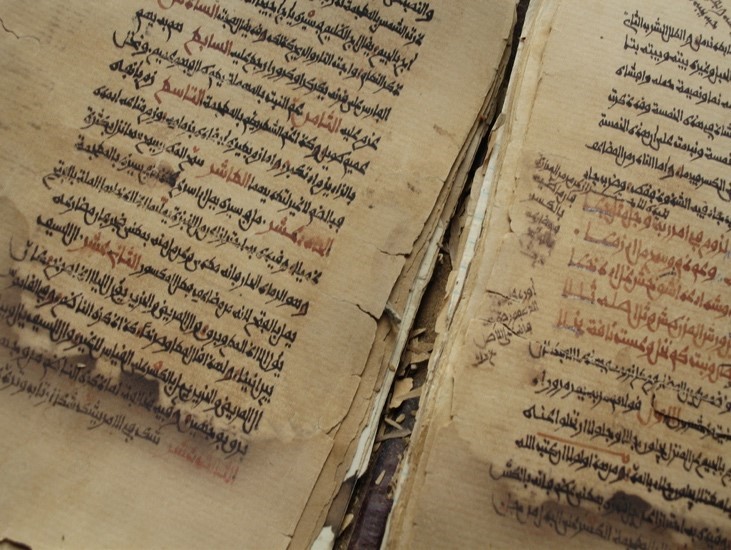
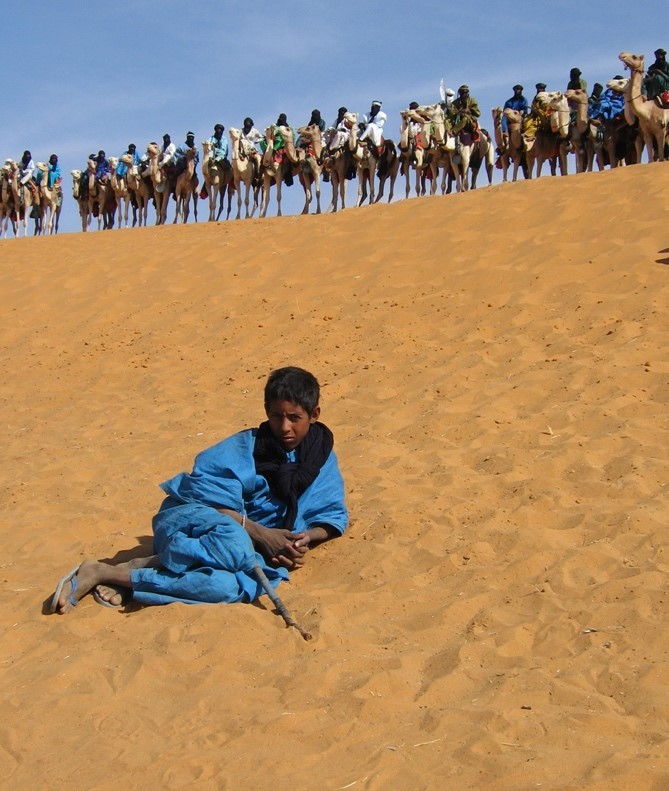
We had come here to try to capture what remained
We didn’t get much that first day. Not in the usual sense. But that moment in the courtyard, with the manuscript catching light and holding it – it stayed with me. It reminded me that documentary work isn’t always about what you capture. Sometimes it’s about what you witness. And sometimes, if you’re lucky, it’s about remembering what you came to find before it slips entirely from view.
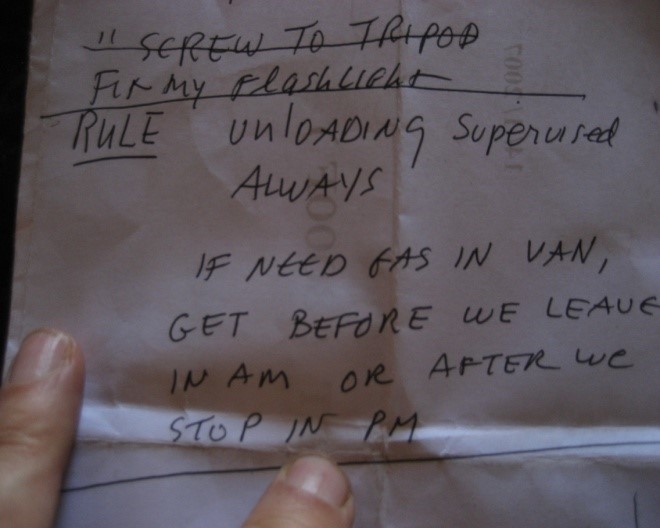
involved, it might make Valery feel criticized by me since the domain of money on a project like this belonged solidly with the producer not the guy in the back seat with the camera.
She went off to pay and I added to my notes to mention to Valery later that she shouldn’t have to pay for the gas herself but rather let the drivers handle that. Or let Issa deal with it. Where was Issa?
While we waited for the vehicles to get filled, all I could think about was the beautiful shots I was missing on the bridge. People carrying things on their heads!
I started to think about our situation. Maybe unbeknownst to any of us, gas cost four or five times what it cost in the U.S? Filling up a big vehicle at home might cost $100. So five times that could be $500.
If Valery was right about the cost of petrol, this could be a big problem. We have three huge Toyota Land appears.
Lesson: You don’t have to know what you’re doing yet to start becoming who you are.