The Shroud Of Turin
When our plane landed in Turin, I picked up a message from our producer: “Permission granted! Small window. Come now!”
I’d spent over a year trying to get access to the Shroud of Turin — one of Christianity’s most sacred and mysterious relics — and suddenly the doors opened. I’ll say it: A minor miracle.
My wife and I went straight from the airport to the cathedral. We were led through a side entrance passing armed guards and into an alcove where the Shroud was being prepared for public display — the first time in nearly a hundred years.
And there it was. Fourteen feet of ancient linen, unrolled flat before us, bearing the faint, haunting image of a crucified man. No velvet ropes. It wasn’t under glass. Just there. A priest stood beside it, calmly taking our interview. I asked him to stand at the corner of the Shroud so he could share the frame — him and the image, living flesh beside imprint. Phyllis hovered the boom mike over the cloth – fully aware of the international incident awaiting us if for any reason she hit the cloth with the mic.
Around us, priests and nuns paced quietly, murmuring into cell phones. A section near the edge of the cloth, damaged in a fire in 1534, lay exposed like an open wound, was being patched by a nun from the Archdiocese of Turin. People moved past it with quiet efficiency. And all I could think was: this felt like a wake. The body laid out. The world continuing.
Years earlier, a close friend and I wrote a screenplay inspired by the Shroud. In our story, a scientist gains rare access to the relic and extracts a tiny fragment of blood from its fibers — actual blood, by the way, has been confirmed on the cloth. From that single drop, he clones the man whose image appears on the linen. The film spirals from there into science, faith, and mystery — a speculative what-if wrapped around one of the world’s most enduring religious enigmas.
It was fiction. We wrote it never imagining that one day I’d be standing inches from the real thing, camera in hand, framing the image that shouldn’t exist.
For centuries, the Shroud of Turin has inspired awe, devotion—and fierce debate.
Is it the burial cloth of Jesus, or the work of a gifted hand from the Middle Ages?
Of all the films I’ve made, this one lingers with me. Less for the answers it might provide – but because of the questions it leaves behind.
The Shroud is a linen cloth, fourteen feet long, faintly imprinted with the front and back image of a man – as if the fabric had wrapped his body head to toe. His hands are crossed over his pelvis. Blood stains appear at the wrists, feet, and side. There are marks on the back consistent with scourging, and a trace of something like a crown across the scalp. The figure is ghostlike—sepia-toned and subtle, almost disappearing when viewed up close, yet strangely detailed when seen from a distance. And somehow photographic in its symmetry.
No one knows exactly how the image was made. It’s not paint or dye. There are no brushstrokes, no visible application of pigment. The image rests only on the outermost fibers of the threads—less than a human hair deep. Some have called it a scorch. Others, a chemical reaction. Some believe it was a burst of radiant energy at the moment of resurrection. And yet… no laboratory, no experiment, no modern imaging technology has been able to reproduce it.
In 1988, carbon dating tests dated the Shroud to sometime between 1260 and 1390. Headlines quickly declared it a medieval fake. But even those results raised questions. The sample used may have come from a portion of the cloth that had been rewoven during a later repair. Other scientists challenged the methodology. More recent studies—including pollen analysis, textile comparisons, and even dust samples—have pointed toward a much older origin.
And then, of course, there is the image itself. However old the cloth may be, the question remains: how did the image get there?
Face of The Shroud
Even if it’s a fake, it’s too good a fake. Too strange. Too subtle. Too… technological.
That contradictions are what kept pulling me in.
Some may roll their eyes at the suggestion that the Shroud of Turin might actually be the burial cloth of Jesus. But if it is real—if that faint, sepia-toned imprint is not a forgery or an accident but the authentic image of a man crucified nearly 2,000 years ago—then we are most probably looking at the face of Jesus.
Not an artist’s rendition, not a symbol, but something closer to a photographic record.
Ironically, it wasn’t until the invention of photography at the end of the 19th century that the image could even be seen clearly. When the Church invited a photographer to document the Shroud—over 14 feet of linen once wrapped head-to-foot and back again around a crucified man—what emerged shocked even skeptics.
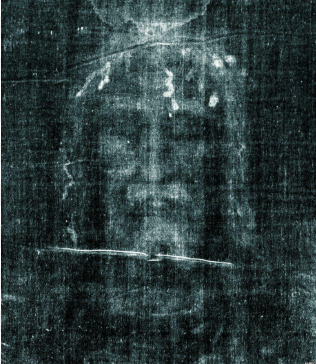
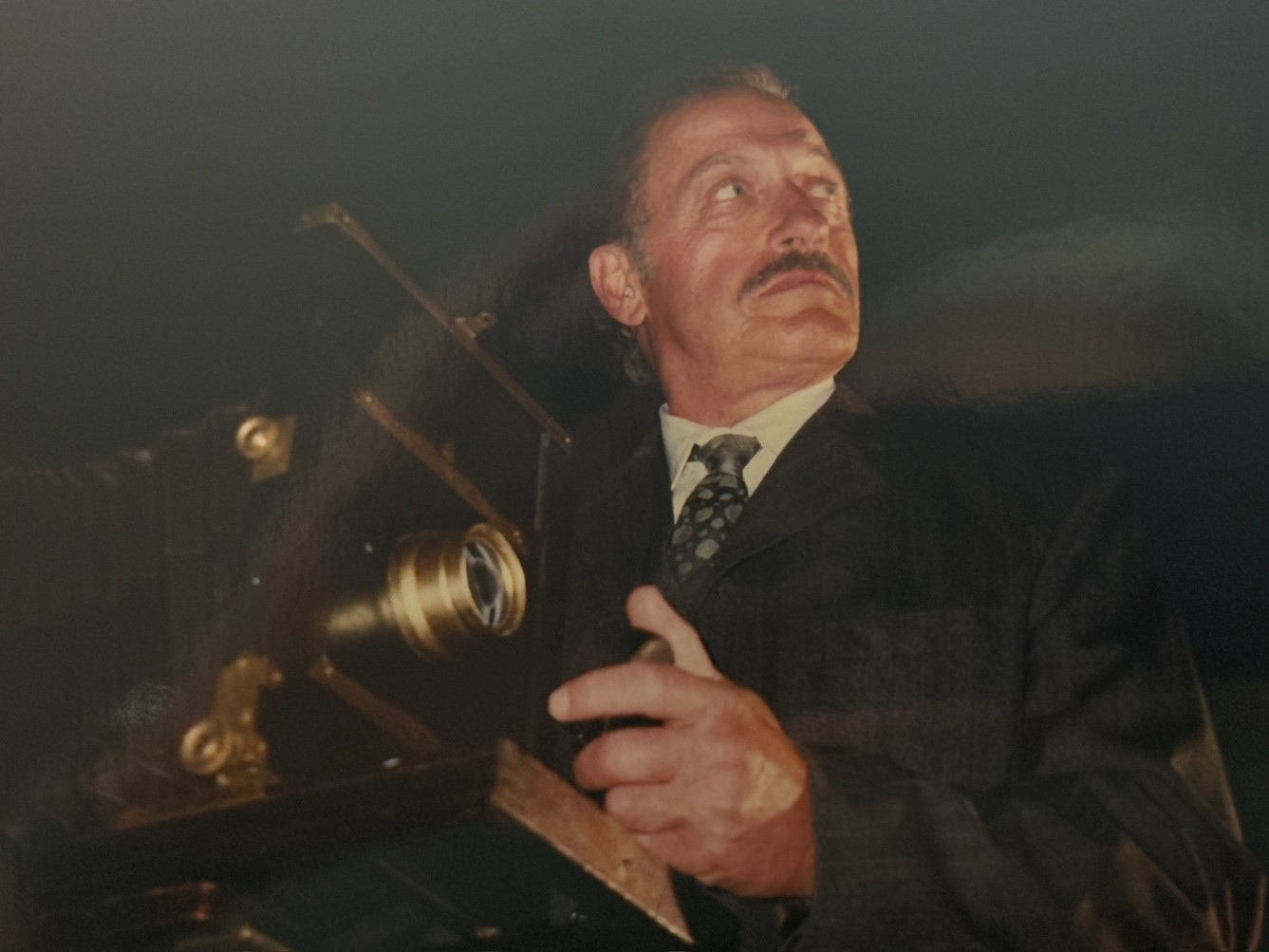
Image of the photographer in recreation for the film
The image, it became instantly clear, was itself a negative image. So, when seen with photography for the first time, what was revealed was a negative of the negative – or a positive image. People saw for the first time The Shroud of Turin.
The image revealed an anatomically accurate human figure, complete with bloodstains and scourge marks consistent with a Roman flagellum, a brutal three-pronged instrument tipped with lead. These wounds matched those described in the Gospels. And yes—scientific analysis confirms the presence of actual human blood on the cloth. So if the Shroud is authentic, it not only affirms that Jesus lived and died as described—it
suggests that this unique image of unknown origin may have been spiritually inspired in some way.
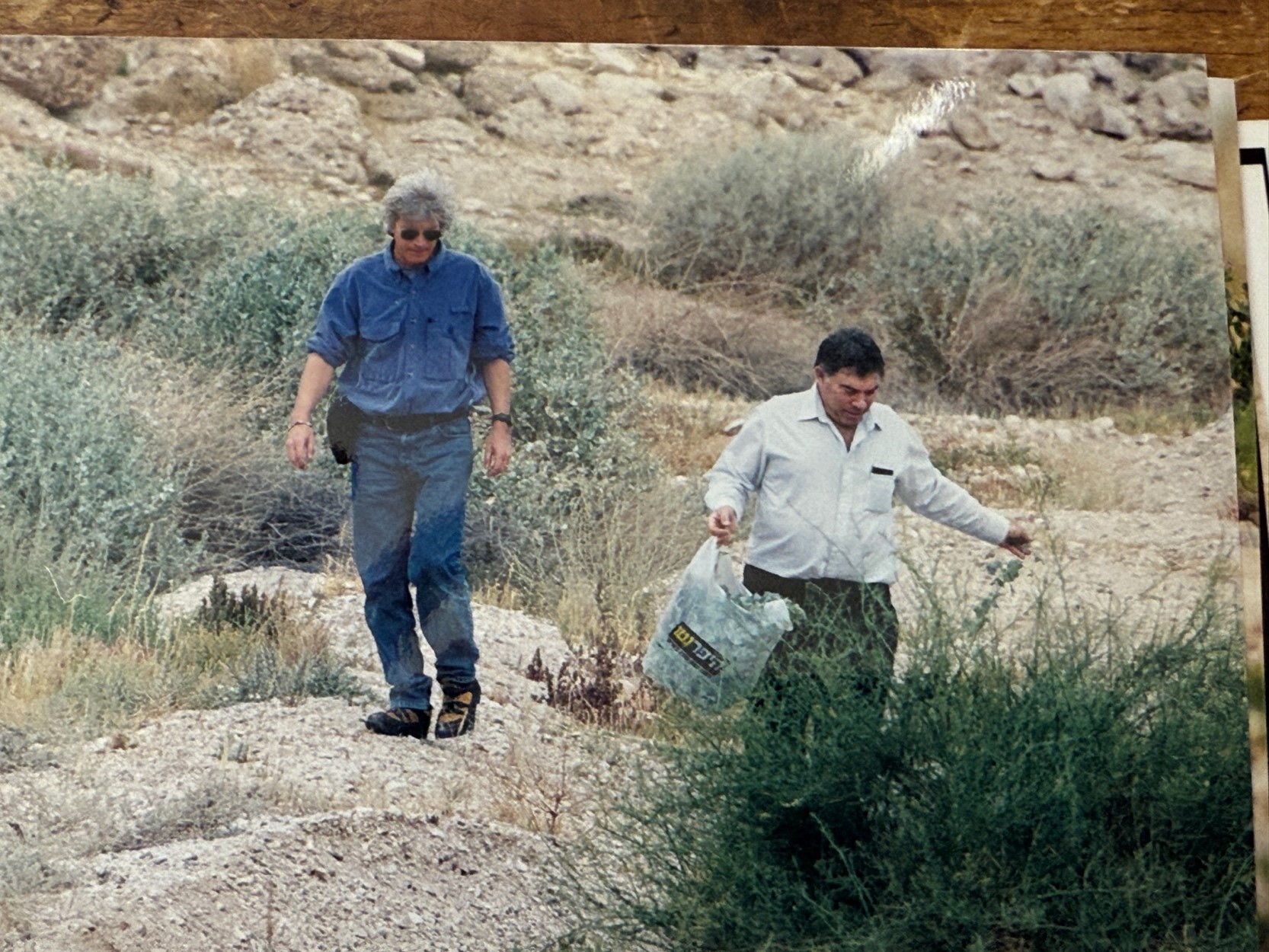
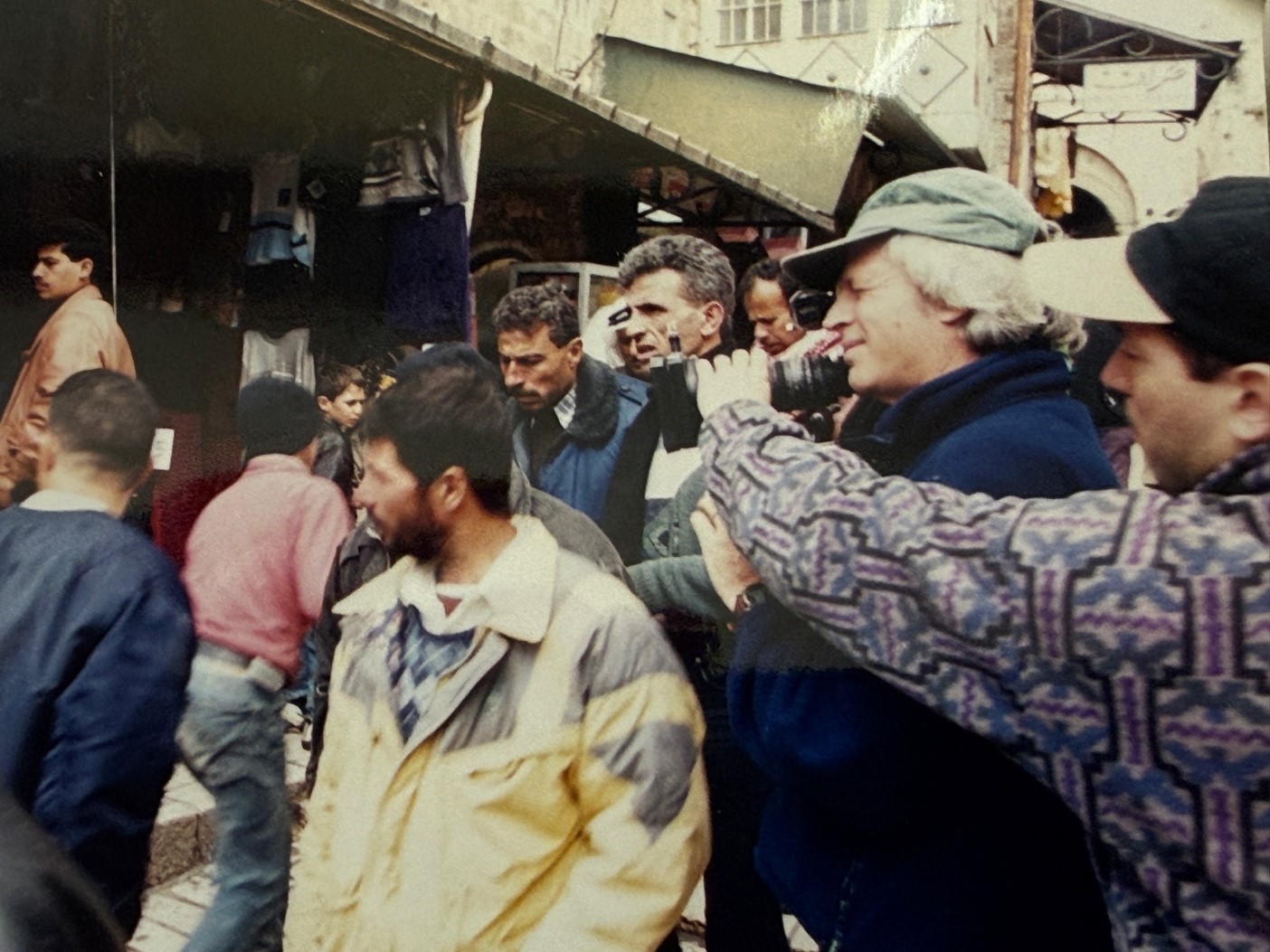
We shot in the old city of Jerusalem where Jesus walked. Then we drove down to the Judean Desert a few hours from Jerusalem.
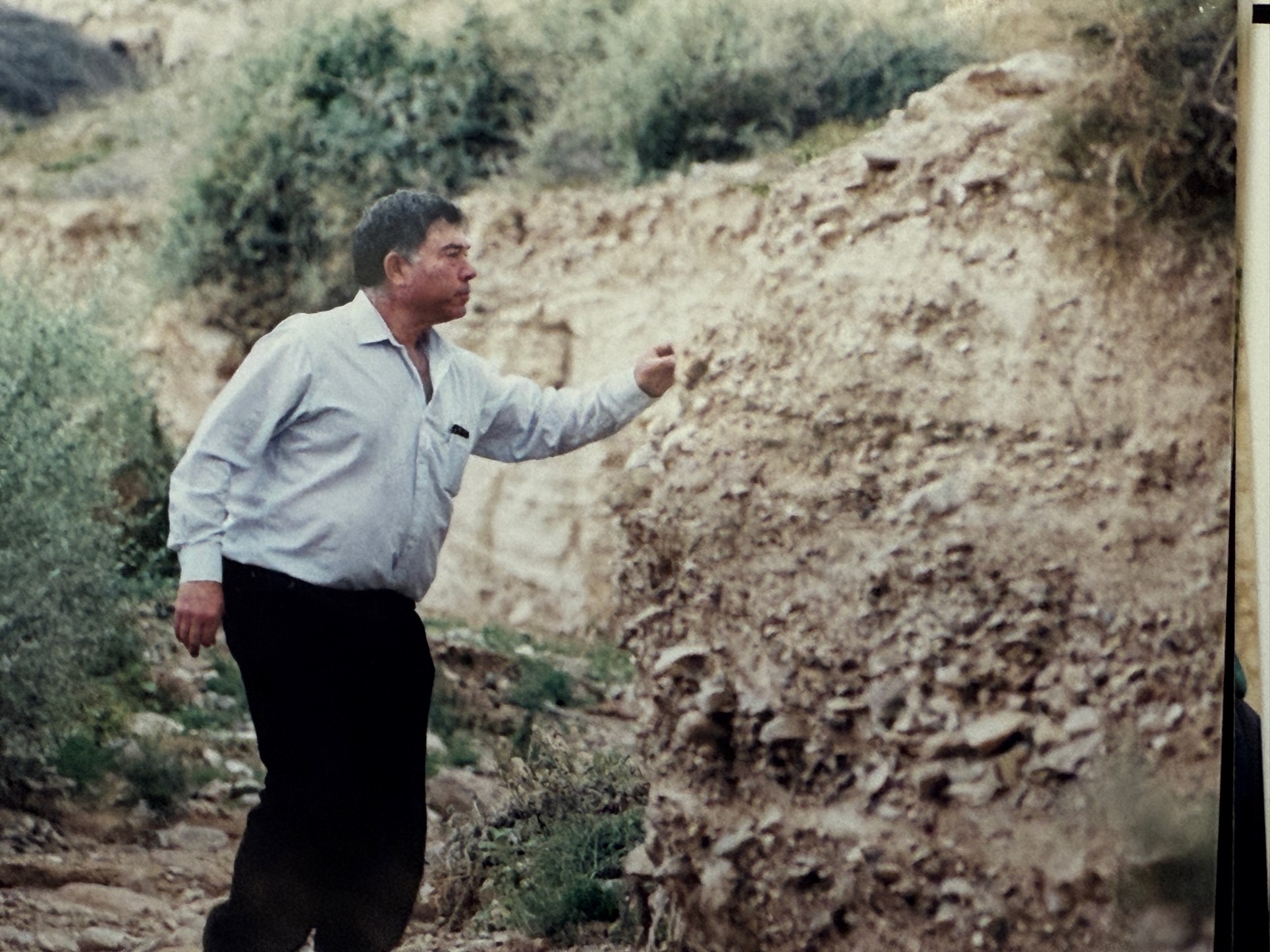
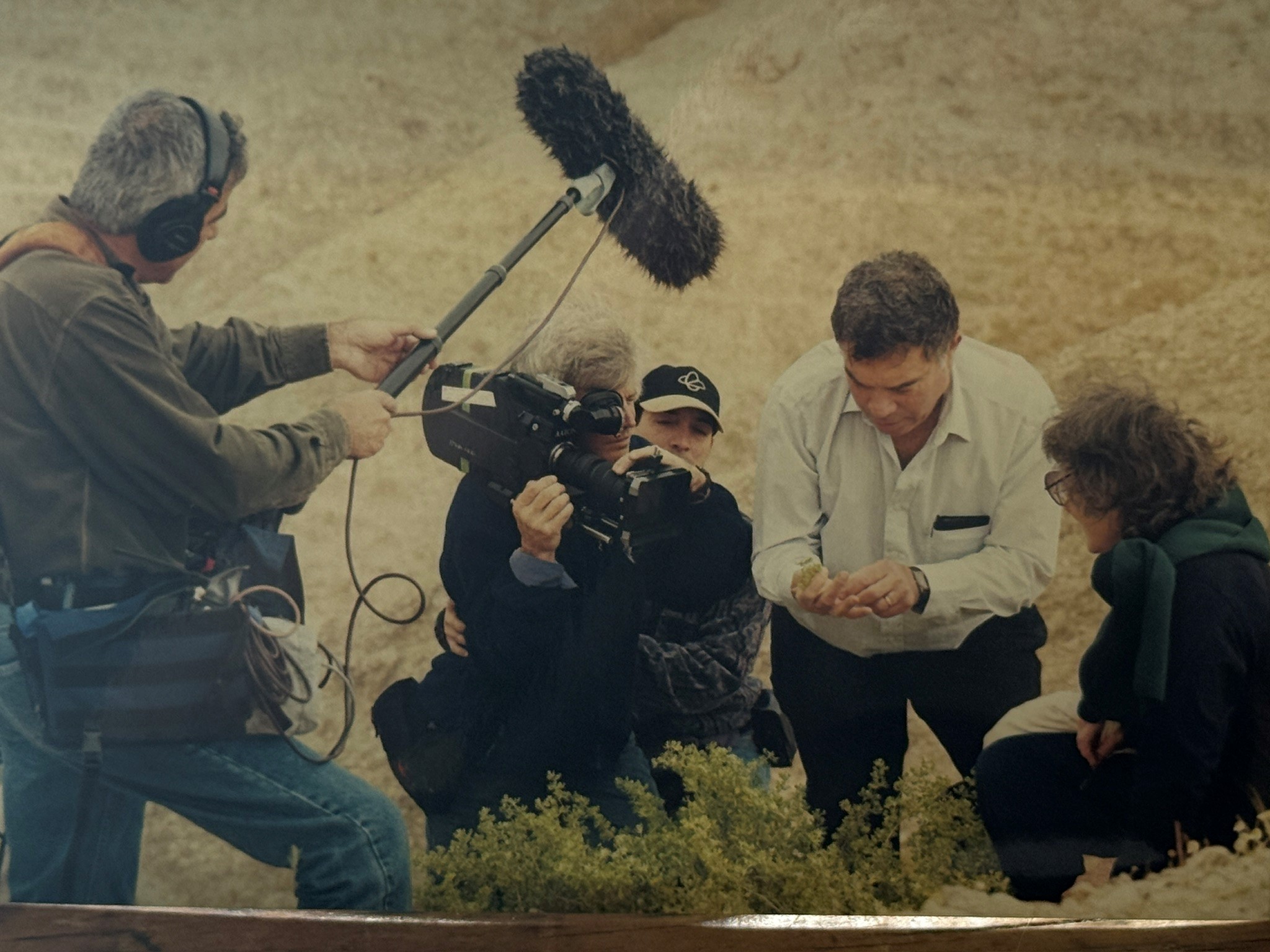
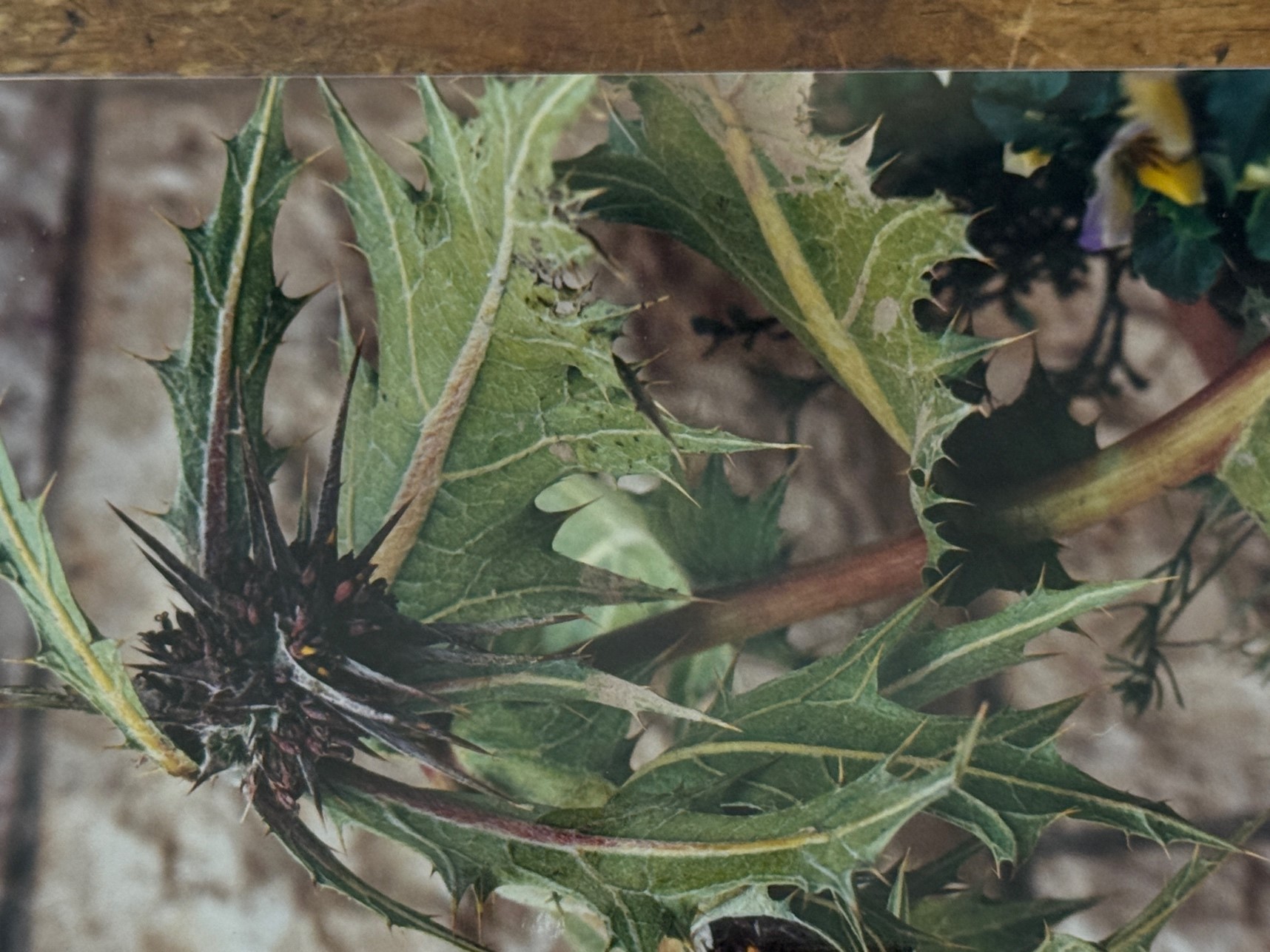
Gundelia tournefortii, he says. Native to this region. Spring-blooming. Thick stems, cruel thorns. He’s convinced this is what was used to make the crown of thorns. Not just because of its shape, but because pollen from this exact species was found on the Shroud, near the imprint of the man’s head. Avinoam saw it under a microscope. “A signature,” he said quietly. “Botanical fingerprint.” I kneel next to it. No grandeur, no divine light. Just a mean-looking shrub clinging to life in a dry patch of dust. And yet, if he’s right… If he’s right, then this little plant has seen things – held history in its thorns. We pack up. Avinoam wraps a sample gently in cloth. I shoot a few frames – close-ups, then wide. Dust on the lens. Good. It should feel rough. Honest. Still no answers. But something happened here today. Dust on the lens. Good. It should feel rough. Honest.
|
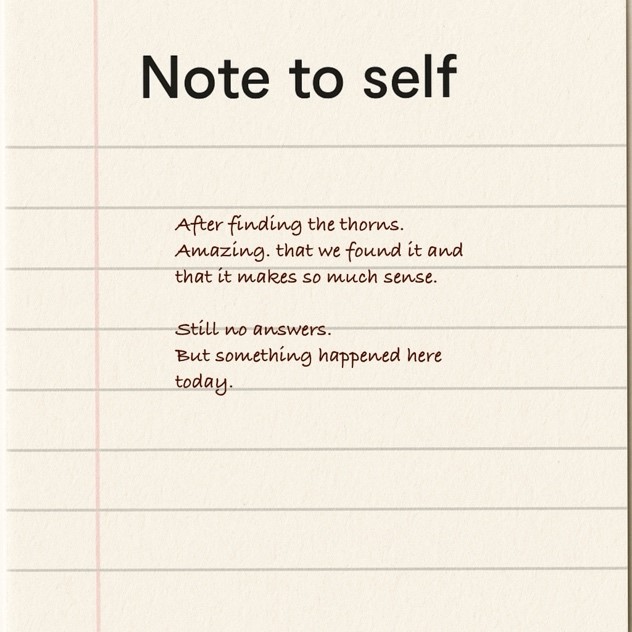
Still no answers. But something happened here today.
The ideas stirred by spending time with the Shroud of Turin are unlike anything I’ve encountered elsewhere. They reach far deeper than a film about a horse race in Italy or a woman bullfighter in Spain, or even a distant tribe whose lives still revolve around stone tools. Those were stories with boundaries.
The Shroud offers no such clarity. Its implications ripple outward — through history, belief, identity, and the meaning of suffering itself.
And the first question people always ask — “Is it real?” — is only the beginning.
Because if it is real — if this linen once wrapped the body of a man named Jesus — then we’re looking not just at cloth, but at history’s hinge point: the physical trace of a life that altered the world.
But if it’s not real, if it was somehow created centuries later… then how?
How did someone produce an image we still can’t replicate with today’s technology?
Why would they have known to embed microscopic traces of ancient pollen — grains no one would even identify for another six centuries — before science or microscopy existed?
It wasn’t only the image that stayed with me. It was the quiet conviction of the scientists I met — each chasing a truth hidden in plain sight. The sharper their tools became, the deeper the mystery grew, as if the cloth itself refused to yield.
I don’t speak much about faith. But something in that year unsettled me, quietly. As if the image had reached past all the questions and touched something wordless. I left with no certainty — only the sense that something had opened, and hasn’t closed since.
If he’s right, then this little plant has seen things – held history in its thorns.
We pack up.
Avinoam wraps a sample gently in cloth.
I shoot a few frames – close-ups. Wide. Dust in the lens.
Good. It should feel rough. Still no answers. But something happened here today.
The ideas stirred by spending time with the Shroud of Turin are powerful – and unlike anything I’ve encountered elsewhere. They reach far deeper than a film about a horse race in Italy or a woman bullfighter in Spain, or even a distant tribe whose lives still revolve around stone tools. Those were compelling stories. But they were stories with boundaries.
The Shroud offers no such clarity. Its implications ripple outward – through history, belief, identity, and the meaning of suffering itself.
And the first question people always ask – “Is it real?” – is only the beginning. Because if it is real – if this linen once wrapped the body of a man named Jesus – then we are looking not just at cloth, but at history’s hinge point. The physical trace of a life that altered the world.
But if it’s not real, if it was somehow created centuries later… then how? How did someone produce an image we still can’t even replicate with today’s technology? Why would they have known and decided to embed microscopic traces of ancient pollen – grains no one would discover for another 600 years – before science or microscopy even existed?
It wasn’t just the image that stayed with me. It was the quiet conviction of the scientists I met, each chasing a truth hidden in plain sight. The better their tools became, the more the mystery deepened – and the more the cloth seemed to hold its ground.
I don’t speak much about faith. But something in that year unsettled me, quietly. As if the image had reached past all the questions and settled somewhere I can’t quite name. I left with no certainty. Only the sense that something had opened – and hasn’t closed since.