SHORT TAKES
A WHITE ROSE
UP IN A TREE
---- Absences & Interruptions ----
MISSED IT
The potential shot of a lifetime – gone before my eyes.
T.REX INTERRUPTED
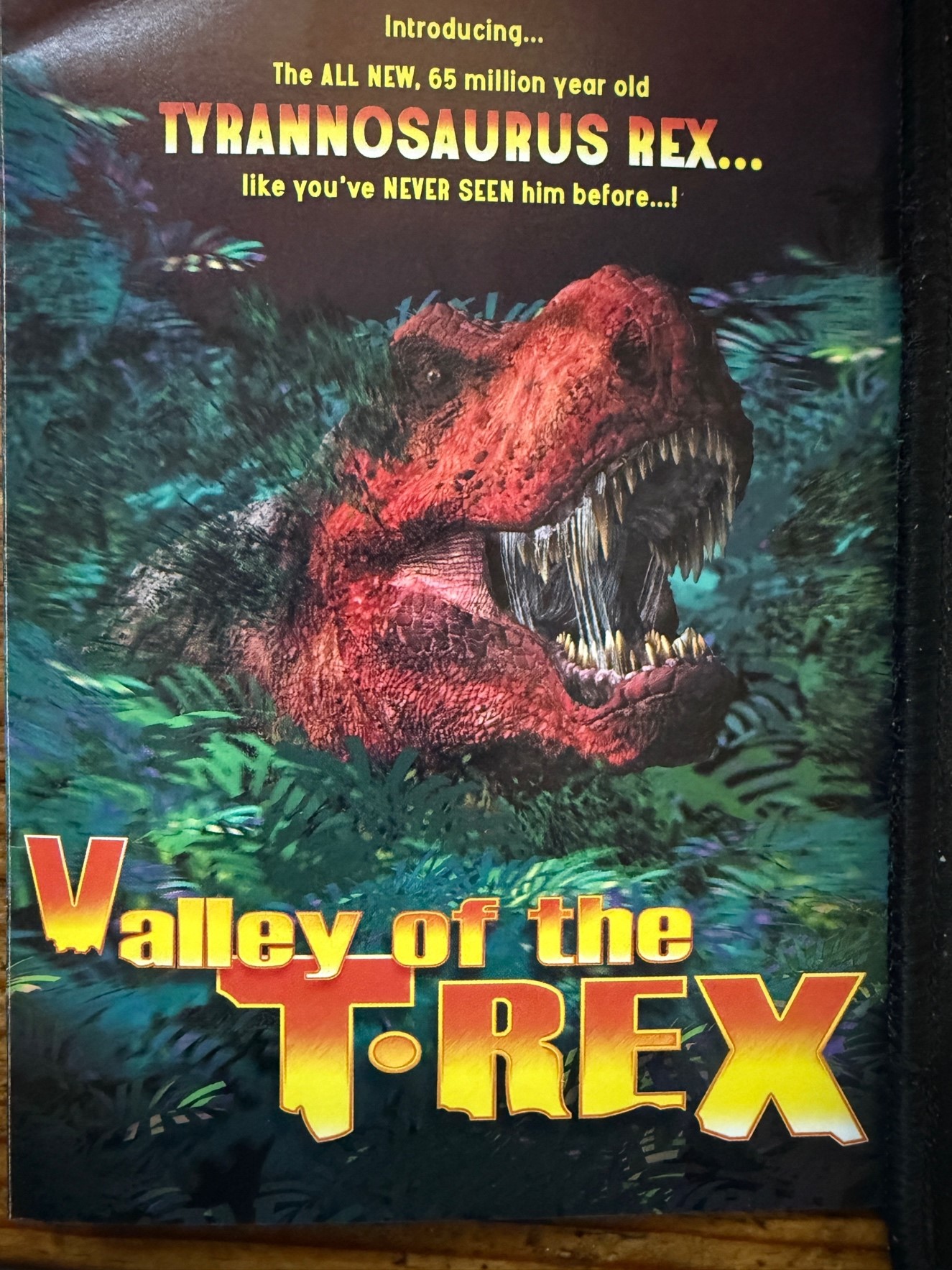
Our film premiered on September 11th, 2001 – and no one ever saw it.
DANCES WITH ECHOES
A film about the Great Plains – but a planned opening shot never happened.
---- Encounters & Emotion ----
SORRY I CAN’T BE THERE
Filming a U.S. President revealed secrets behind the scenes.
THE SHOT
Through my lens at the Vietnam Memorial, a touch of the wall moved me to tears.
A TIGER IN THEORY
No tigers in sight – just a jungle quiz on how to film what isn’t there.
---- Reflections & Keepsakes ----
ARTWORK FROM THE ROAD
Finding and carrying art home from faraway shoots has inspired me forever.
SHORT TAKES
- A White Rose Cuba
- Up in a Tree
Laughing Korowai Tribe
- Missed It
The Shot that never happened
- T.Rex, Interrupted
9.11 Got in the Way
- Dances with Echoes
7 days 7 cameras
- Sorry I can’t be there
Clinton’s Teleprompter
A White Rose
In Cuba, filming Calle Figueroa, a family living across from the park where we left our van each day asked us:
“¿Van a seguir cargando con todo eso pa’rriba y pa’bajo?”
I didn’t understand their Cubanese at first. Was even a little suspicious.
Then I got it: “Why not store your gear here, (meaning their house) instead of hauling it back and forth to the hotel every night?”
We accepted.
That’s how we met Patricia, their young daughter, who–her father proudly whispered–plays piano.
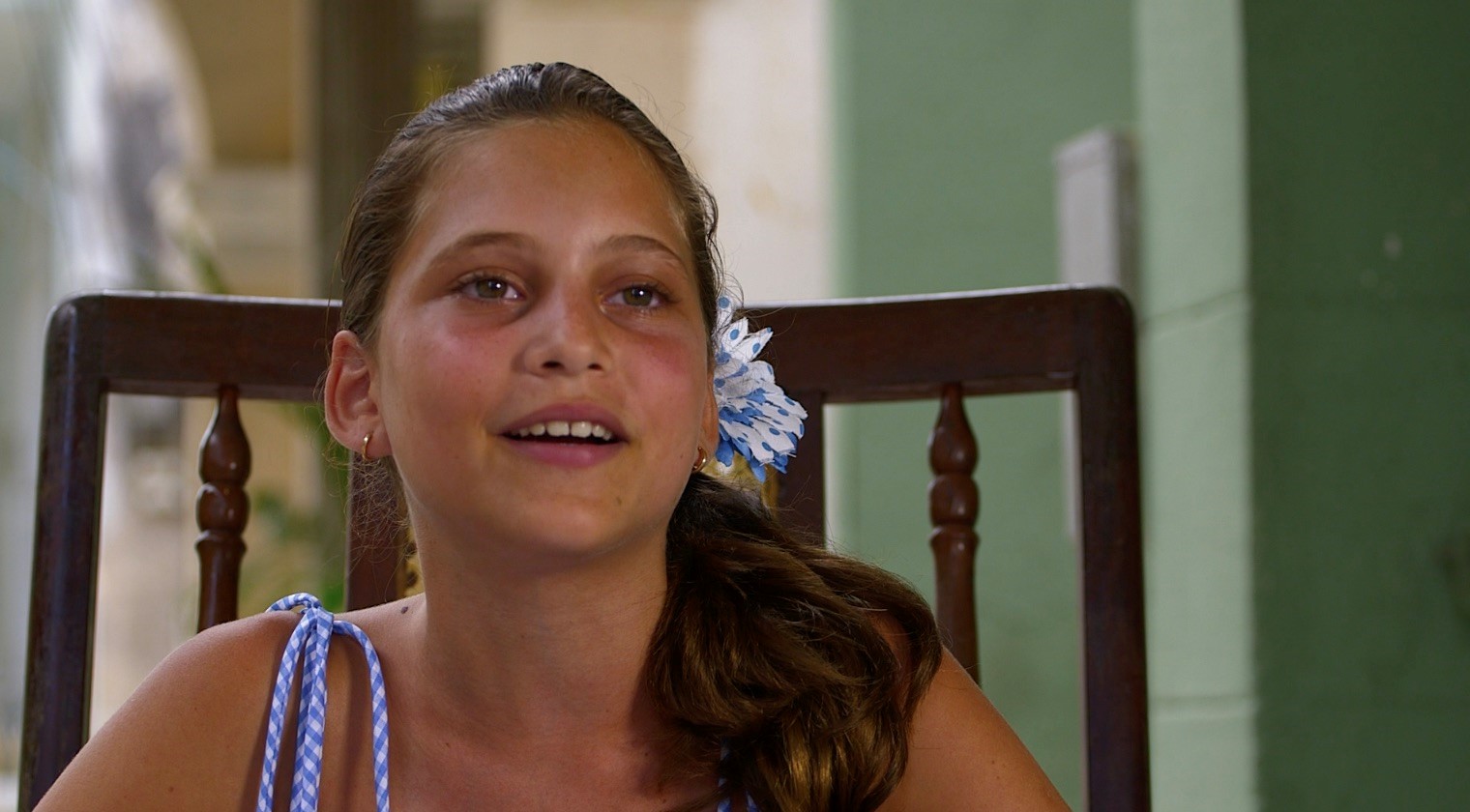
That night, I imagined an opening for our film: the camera drifts down the sidewalk, past laundry lines and chipped walls, the sound of a piano growing in the background–a sonata rising through the noise of the neighborhood. We push in on a window. Inside: Patricia, plays something transcendent: our film’s opening!
The day came to film her. We lit the room, Patricia dressed for the moment, and we rolled.
Shock and surprise: The piano was wildly out of tune. The melody was simple, halting–age-appropriate but not the brilliant piano sound I’d imagined.
Instead of a perfect opening, I got a child, a broken piano, and a lesson in the limits of expectation.
Later, in the interview with her, we asked what she liked to read.
She softly recited a poem by Cuba’s Jose Martí by heart:
“I grow a white rose in July as in January…”
His poem is about grace. About choosing to offer kindness to both friend and foe.
It’s about beauty that doesn’t depend on season or circumstance–about dignity, even when the world doesn’t give it freely.
In that moment, it felt like Patricia and Marti were speaking for the whole street. The whole island.
A fragile offering in an imperfect world.
A white rose on Calle Figueroa.
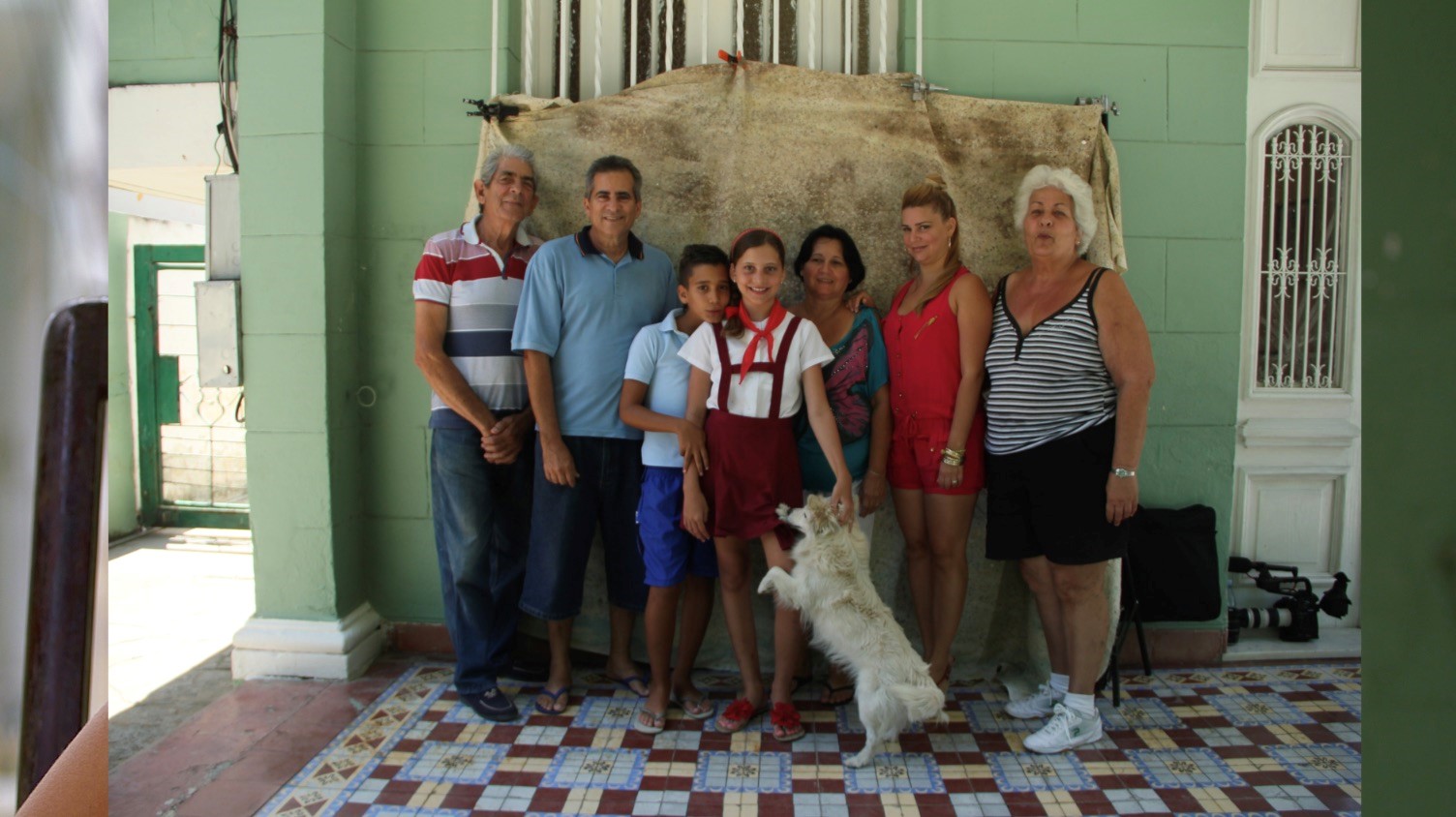
Afterward, they all stood in the doorway, smiling for the camera like it was a holiday.
And maybe it was.
Up in a Tree
A film about the Korowai tribe of Irian Jaya who build amazing tree houses 40 feet above the rainforest floor.They made their way through the jungle to chop down trees for their tree house. While most of what we recorded was awkwardly translated for us as we went long, I’d decided this morning to just let them go without any such interruptions from us. We would just trust our instincts and guess what they were saying back and forth. Then figure it out later months later back in editing at home
I was curious, as well, how they were actually able to chop down trees using just the stone age tools they had.
Chattering and laughing the whole time, one of them started whacking away with his stone ax. We kind of knew they were talking about us because we could hear them say “Bapak-Bapak” which we came to understand meant Honored Visitors.
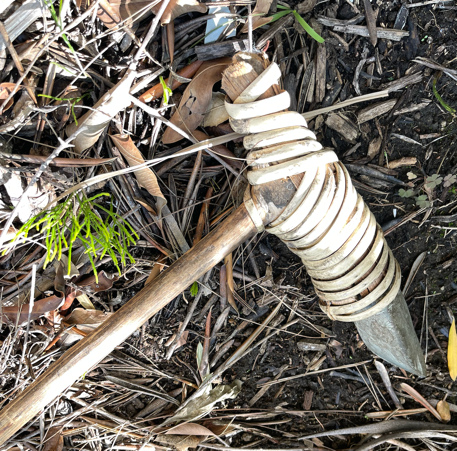
At one point, whoever was chopping traded axes with another and continued to chop. It wasn’t until we returned and were in the editing room a month later and had gotten the translation that we learned what they were talking and laughing about:
Korowai #1: (stops chopping)
This axe just isn’t sharp enough. Let me use yours.
Korowai #2. (they trade)
Here. But be careful. Don’t let that tree fall on the Bapak-Bapak. They could be in real danger. Someone ask them to move back.
Korowai #1: (while chopping)
If the tree falls on them and they get hurt, who’s going to can carry them out? They’re so big! (much laughter)
Korowai #2: (glancing around at the heaviest of us)
Oh, it’s impossible! No one is strong enough to carry them!
(more laughing)
Maybe they laughed because they knew something we didn’t — that the jungle always wins, and the only way out is together.
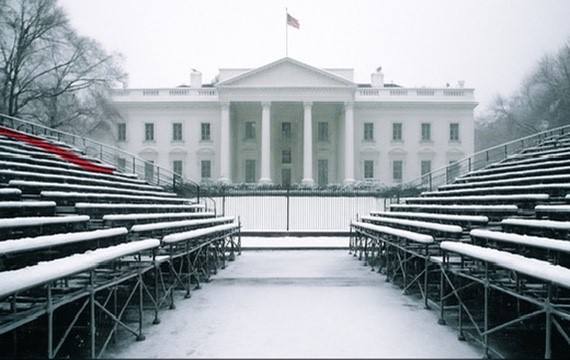
Inauguration Day, Washington D.C. Cold, as always. I had just bought a great new coat — warm, sharp, made for working outside with a camera in hand. The stands in front of the White House were newly built, gleaming and stiff, waiting to be filled with Important People.
That morning, while wandering the empty rows with my camera, I looked over toward the White House and saw the front door open. Out came George W. Bush — walking his dog. Just the President, the lawn, the cold. It felt like a perfect moment: private, tender, quiet before the storm. The kind of image that would lead the evening news. A poetic final walk before power handed off.
I leaned into the rail and framed it. Beautiful shot. And then… he went back inside.
And only then did I realize: I had never hit record.
No footage. No moment. Just a streak of white paint on the sleeve of my brand new coat — and one more lesson for the shelf.
Inauguration Day, Washington D.C. Cold, as always. I had just bought a great new coat — warm, sharp, made for working outside with a camera in hand. The stands in front of the White House were newly built, gleaming and stiff, waiting to be filled with Important People.
That morning, while wandering the empty rows with my camera, I looked over toward the White House and saw the front door open. Out came George W. Bush
— walking his dog. Just the President, the lawn, the cold. It felt like a perfect moment: private, tender, quiet before the storm. The kind of image that would lead the evening news. A poetic final walk before power handed off.
I leaned into the rail and framed it. Beautiful shot. And then… he went back inside.
And only then did I realize: I had never hit record.
No footage. No moment. Just a streak of white paint on the sleeve of my brand new coat — and one more lesson for the shelf.
It was the kind of documentary that should have roared.
We’d spent months following a legendary paleontologist who had uncovered more T-Rex remains than almost anyone alive. He could tell you how they moved, how they hunted, even how their breath might have smelled. Discovery Channel gave us a prime slot. The film was sharp. Big. Loud. A beast in its own right.
We were proud of it. Polished the final cut. Lined up the promo. Told friends to tune in.
And then… the towers fell.
Our documentary aired the night after 9/11.
Which means: nobody saw it. Not one person I know. Not a word. The planet had just changed, and a thunder-lizard roaring on a flatscreen no longer registered.
A film about extinction, swallowed by another.
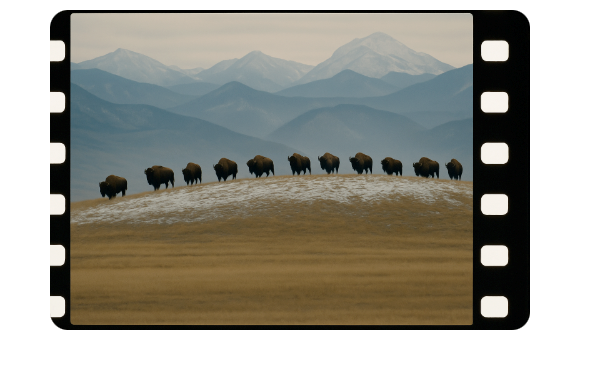
I was working on a film about the Great Plains and had an idea for the opening. The kind of shot that carries its own weight: mountain ranges layered in the distance, a gentle rise in the foreground, and just over that rise — a herd of buffalo, cresting the hill like a living painting.
We were told there was a ranch that could make it happen. Said they’d done it before. Turns out, it was the same place where they filmed parts of Dances with Wolves. That helped my confidence.
Early morning. Great light. Camera locked. Five guys on horseback head out to drive the buffalo up the hill, just as planned.
“They’re coming,” someone calls out.
And sure enough — there they are. The herd emerges, slow and heavy. Just as they reach the crest, they stop. Dead still. They see us. And just stare.
No stampede. No slow-motion majesty. Just a wall of buffalo eyes, blinking.
I was working on a film about the Great Plains and had an idea for the opening. The kind of shot that carries its own weight: mountain ranges layered in the distance, a gentle rise in the foreground, and just over that rise — a herd of buffalo, cresting the hill like a living painting.
We were told there was a ranch that could make it happen. Said they’d done it before. Turns out, it was the same place where they filmed parts of Dances with Wolves. That helped my confidence.
Early morning. Great light. Camera locked. Five guys on horseback head out to drive the buffalo up the hill, just as planned.
“They’re coming,” someone calls out.
And sure enough — there they are. The herd emerges, slow and heavy. Just as they reach the crest, they stop. Dead still. They see us. And just stare.
No stampede. No slow-motion majesty. Just a wall of buffalo eyes, blinking.
“Okay,” someone says, “we’ll try something else.”
Next round: ATVs. The wranglers fire up a handful of those little motorized scooters and zip in behind the herd. Same hill. Same buffalo. Same blank stare.
Plan C: bait them with hay. Maybe food will coax them into formation. The buffalo stroll up just enough to eat. No farther. No choreography. Just chewing.
Eventually, we break for lunch. And I can’t help myself — I turn to one of the crew and ask about a buffalo shot I remembered from Dances with Wolves. A perfect sequence. Epic. Dust flying, horns gleaming, motion and muscle and rhythm.
“How’d you get that shot?” I ask.
He shrugs.
“Seven days. Seven cameras.”
We were making a film about Fulbright, with whom Clinton had a long and formative relationship. For months we’d been trying to get just a few words from him — an introduction to the film, something simple, heartfelt. But it wasn’t until his second inauguration that we were finally invited to record him at the White House.
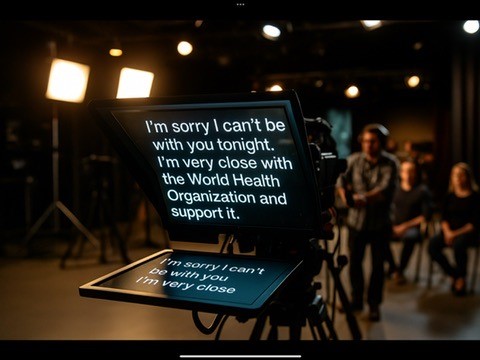
There’s a large media room in a separate building, outfitted for remote appearances — the kind where the President looks into the camera and says, “Sorry I can’t be with you tonight,” followed by a few polished remarks. We were brought in. Dogs sniffed our gear. We set up lights.
As we were finishing, Clinton’s regular crew looked over at our setup and asked if they could use our lighting for the batch of video messages he was about to record. We, of course, said yes.
I was thrilled — not just to have our lighting used, but to watch him work. Clinton is mesmerizing on camera.
He had a thick book in his hand — a binder full of scripts for each video he had to record. He flipped through it faster than I could follow, scanning entire pages like he was skipping stones. Speed-reading. He made a few adjustments here and there, then stepped into place for the first take.
The teleprompter started.
We were making a film about Fulbright, with whom Clinton had a long and formative relationship. For months we’d been trying to get just a few words from him — an introduction to the film, something simple, heartfelt. But it wasn’t until his second inauguration that we were finally invited to record him at the White House.
There’s a large media room in a separate building, outfitted for remote appearances — the kind where the President looks into the camera and says, “Sorry I can’t be with you tonight,” followed by a few polished remarks. We were brought in. Dogs sniffed our gear. We set up lights.
As we were finishing, Clinton’s regular crew looked over at our setup and asked if they could use our lighting for the batch of video messages he was about to record. We, of course, said yes.
I was thrilled — not just to have our lighting used, but to watch him work. Clinton is mesmerizing on camera.
He had a thick book in his hand — a binder full of scripts for each video he had to record. He flipped through it faster than I could follow, scanning entire pages like he was skipping stones. Speed-reading. He made a few adjustments here and there, then stepped into place for the first take.
The teleprompter started.
He started.
And about halfway in, he veered off script.
Not a pause. Not a stumble. He just drifted into a side note — improvised, shifted tone — while the prompter kept scrolling ahead. I held my breath. But by the end, he came back around, tied it up beautifully, and landed right on cue. The rhythm was perfect. He made it look effortless.
After another one like that, I turned to the teleprompter operator, stunned.
“That was incredible,” I said. “How does he do that?”
The guy barely looked up.
“Oh, that’s nothing,” he said. “Two nights ago at the State of the Union, the prompter didn’t work. He spoke off the cuff for half an hour. Nobody noticed.”
And then — when it was finally our turn — Clinton gave us exactly what we needed: a perfectly worded, sincere, sixty-second introduction to Fulbright and why he mattered. No edits. No notes. Just one brilliant take.
The man is amazing.