My First Camera
My First Camera.
Can A Camera a Filmmaker Maketh?
My journey began innocently and a bit naively that day in San Francisco. The day I decided to buy that camera.
It was 1968, a time when the country was engulfed in anti-Vietnam War protests. Buddhist monks in Vietnam were self-immolating, students in Paris Texas and Paris France were demonstrating in the streets, and rock and roll was here to stay.
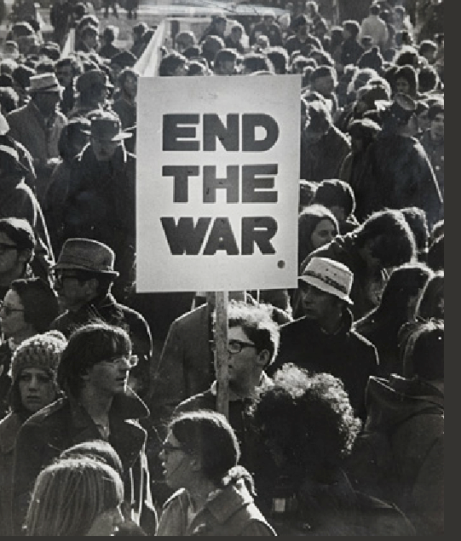
Having recently completed a stint in the Peace Corps in Latin America, I was stumbling along, searching for my place in the world. But progress was slow in finding that place. I was clear on this, however: the war was deeply wrong.
I must be cautious that my recollections from this era aren’t romanticized by time.
Somewhere along the way – maybe from the advertising world – I picked up the belief that the “right” piece of gear might shape me. That the perfect tool could cut through the noise and deliver me from life’s confusion.
I held an innocent belief that by documenting the events unfolding around me, I might also uncover something within myself. Maybe with that camera under my arm, I could discover my sense of purpose.
I bought a used 16mm camera from a guy who lived up a third-story walk-up in the North Beach/Italian section San Francisco. It cost me $100.
The camera might change everything
I don’t think I’ve ever been so excited about buying anything before or since. (Well, except maybe for that used BMW motorcycle that I bought that time in Paris.)
The camera had heft. It was built with solid metal, unlike today’s plastic constructions.
Someone told me that they used these cameras during World War II and that you could drive over them with a tank and they would keep on keeping on.
The camera had a slight hint of mildew about it and came with a well-worn reddish brown leather carrying case. I grew to love that smell. I’d wind the camera with a hand crank on its side and fold it down when I didn’t need it. I’d push a little silver start button, and it would run for about 30 seconds until the spring unwound. I could even change the speed of the shutter from 8 to any speed up to 64 frames per second by rotating a simple wheel on the side. It had the basic stuff, no frills.
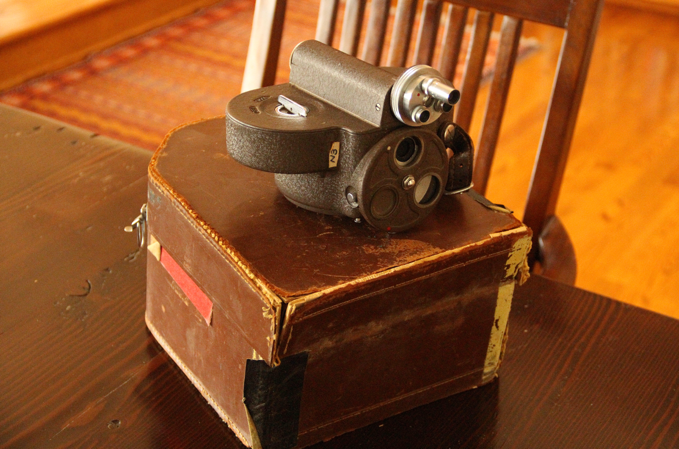
I had an instinct about that camera. I fell in love with that camera. It fit snugly inside its carrying case and symbolized an amazing potential for making films, telling stories, becoming someone. Buying it felt like an entrance fee granting me access to the world of filmmakers.
Does the Camera a Filmmaker Maketh?
Little did I know that this small step would lead to a long journey, evolving into a career that would take me around the world. That single purchase changed how I saw myself and quietly set the course of the life that followed.
Okay. Now what?
Returning home that evening, I placed the camera on my dining room table and stared at it. I couldn’t wait to start – but where? I had no clue. First things first: learn how to load film into the bloody thing!
I called a friend who told me how to use a light meter to expose the film properly.
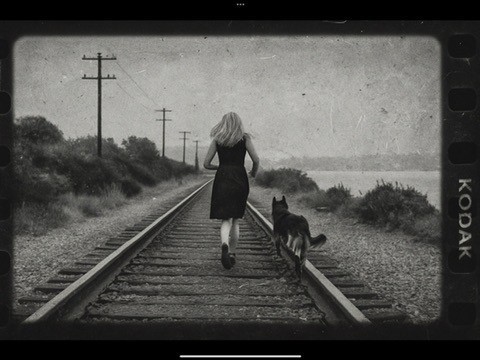
Excited to begin, I tested out the camera the next morning by getting a shot of my girlfriend Judy running along the railroad tracks with our dog Jake. I remember the Click Click Click Click Click sound of the camera as it pulled the film down and the shutter opened to expose an image twenty-four times in a second. My heart pounding.
Having recently completed a stint in the Peace Corps in Latin America, I was stumbling along, searching for my place in the world. But progress was slow in finding that place. I was clear on this, however: the war was deeply wrong.
I must be cautious that my recollections from this era aren’t romanticized by time.
Somewhere along the way – maybe from the advertising world – I picked up the belief that the “right” piece of gear might shape me. That the perfect tool could cut through the noise and deliver me from life’s confusion.
I held an innocent belief that by documenting the events unfolding around me, I might also uncover something within myself. Maybe with that camera under my arm, I could discover my sense of purpose.
I bought a used 16mm camera from a guy who lived up a third-story walk-up in the North Beach/Italian section San Francisco. It cost me $100.
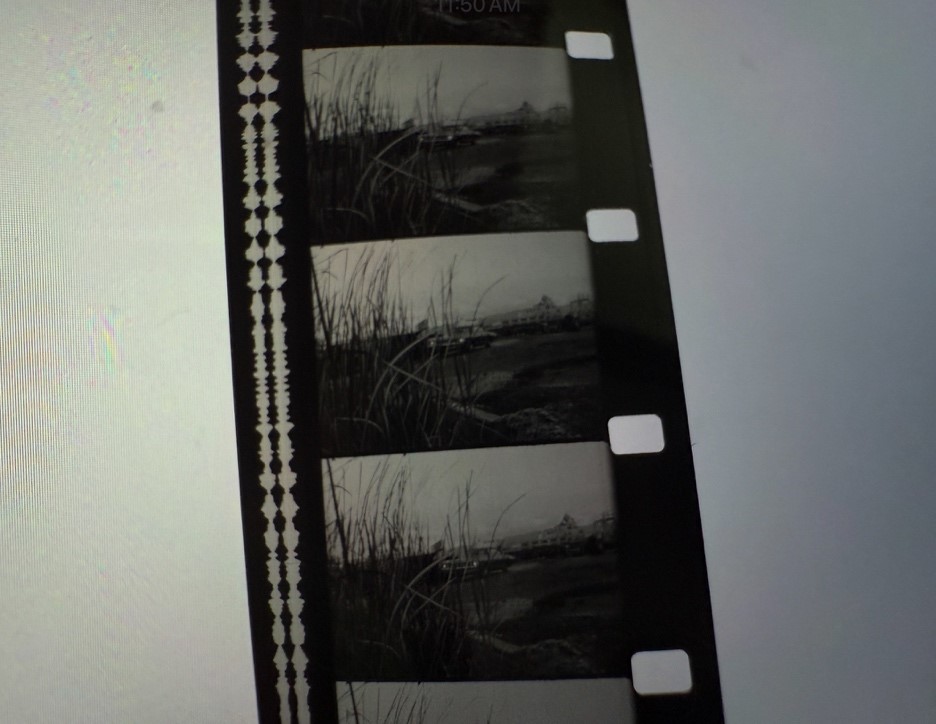
I had to take the exposed film to a lab in San Francisco and wait a few days for it to be developed. I remember half-joking about camping out in front of the place, just to be there the exact moment it was ready. People growing up with video today have no idea what it meant to wait – sometimes days – for those images to come to life.
Any sufficiently advanced technology is indistinguishable from magic.”
Arthur C. Clark
When I had it in my hands, I unspooled the first few feet of film while still in the lobby of the lab amid the sweet-sour fragrances of lab chemicals. And like magic, there it was: the first image – just as I had hoped it would be.
I hurried home, loaded it onto my projector, and watched with Judy and Jake as their running images wavered a bit on the small folds of the white sheet I used as a screen. I’ve never seen anything quite so exhilarating or magical.
The hum of the projector, the hush in the room, the way the image breathed across the wrinkled sheet – and then, our voices, bursting out in screams we couldn’t contain. The staggering surprise that something we made could feel so alive.
It was the first hint that film could capture memory, emotion – even truth.
I didn’t know it then, but that flickering image – soft, steady, alive – was the beginning of everything. Something opened in me that night. And I’ve been chasing it ever since.
It was the feeling that I’d found a tool to navigate the world – to see clearly, to listen more closely, and to follow the stories that live beneath the surface.
That moment has never really left me. Everything I’ve filmed since traces back to that same spark.
Lesson: The right tool won’t solve your confusion, but it might give you something steady to hold while you find your way.
Lesson: Intuition can be more trustworthy than instruction - especially at the beginning.
Lesson: You don’t have to know what you’re doing yet to start becoming who you are.
Lesson: The gear you start with shapes how you see. Let it slow you down enough to notice.
Lesson: Readiness is a myth. Curiosity is enough.
Lesson: You might not see the magic while you’re making it. But it’s there, waiting in the light.
Lesson: Small moments – especially the ones that feel quietly monumental – can redirect your entire path.
Lesson: The tool isn’t the calling. But it can be the door.