Red Flags & Sacred Texts (Part 2)
RED FLAGS & SACRED TEXTS (PART 2)
Secret Manuscripts Of Mali
Oye Vey
I read somewhere that 65% of Mali is desert and less than 4% is arable land.
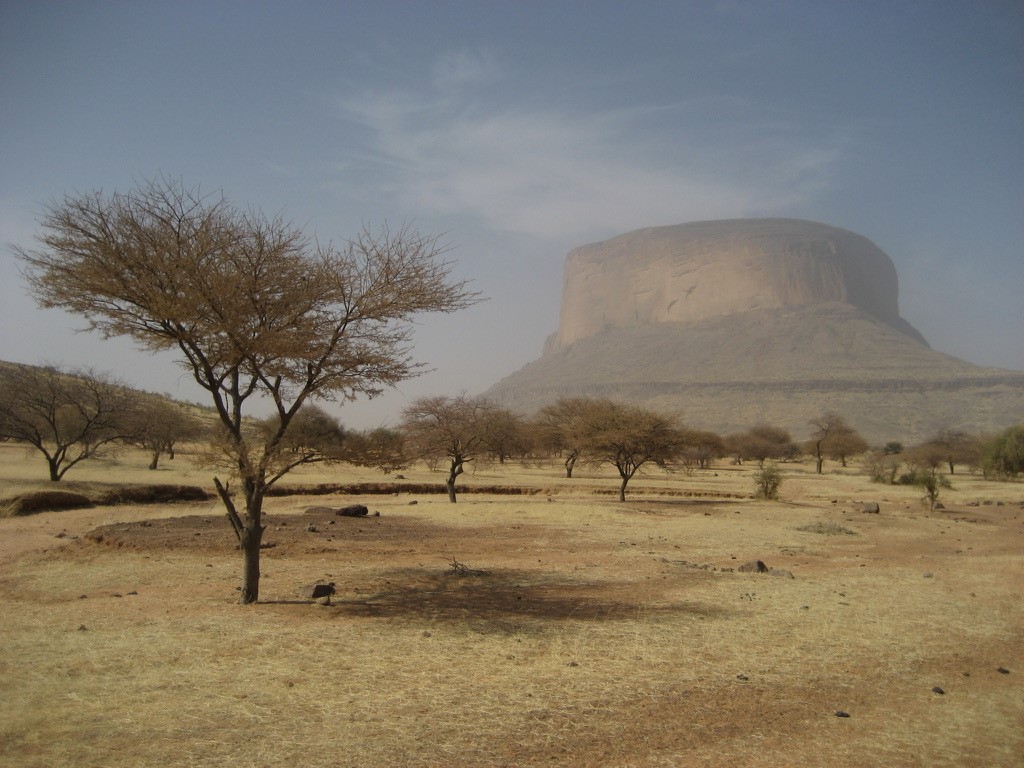
Within a few minutes after leaving the gas station on day 2, Toyotas 1, 2 and 3 were kicking up dust driving at a good clip with pretty much nothing out there to look at except the occasional low-lying shrub and the dry, barren land as far as the eye could see. There was certainly nothing particular to stop and film. Unless of course nothing was something we wanted to document.
The Road to Mopti
A False Alarm at Breakfast
Earlier, most of us were having a great breakfast on schedule at the hotel as per the plan when Valery came into the room slightly out of breath. “Are they supposed to be loading up the equipment cases for some reason?”
Yikes. Apparently, hotel staff had taken it upon themselves to load the equipment without supervision.
I stand up. “Wow. That doesn’t sound good.”
Indeed, we had made it clear – or so we thought – that one of us from the crew would have to supervise any loading process for the first few days lest there be some piece of equipment misplaced or “gone missing” and to kind of retrain the way that most drivers across the globe seem to have of jamming cases haphazardly into any available space. In theory, after a while, once we’d accomplished this supervised way of loading, the drivers, crew and everyone would know the drill and it would happen smoothly and properly.
I headed out just as fast as I could without telegraphing the concern that I had. Jon jumped up and came with me.
When we got to the vans, it was already blazing hot outside in spite of the early hour. N’ere a creature was stirring. To my relief, nothing seemed to be happening with the equipment. Instead, the drivers were waiting around for us as we had discussed. Apparent false alarm or miscommunication. Or something.
Jon and I decided we might as well begin the loading process a bit ahead of schedule. And soon, without much confusion at all to speak of, the hotel guys and a few of the drivers, Jon and then Laurent and I loaded the vehicles as planned and rehearsed. All good.
The Great Van Debate
Back at breakfast, still on schedule, the silliness began. Valery looked up from her notebook.
“Reuben, you and I and Holly and Issa will go in Van #2.”
Oops. This wasn’t the plan. Right people. Wrong van. Cameras were supposed to stay with the crew that used them. Day one decisions matter; they set the tone for how a shoot unfolds.
Her tone was official sounding like the Vice Principal at school giving announcements over the morning PA system. “All seventh-grade advanced English classes; report to the auditorium second period.”
Why Are We Even Changing This?
“But we’re set to ride in Van #1.” I reminded her. It was obvious that something had changed but no one had mentioned it to me.
We had settled all this the previous day. I never wanted to be separated from the camera in case something needed to be shot quickly and we had become separated from the other vehicles for any one of a million possible reasons.
Decisions made on the first day of shooting are important ones. Patterns of working get established. Precedent gets set.
Valery explained that Van #2 already had “the food.” That didn’t explain much, but it was apparently linked to driver loyalties – Issa needed to travel with his favorite driver, Mohammed, who drove Van #2 Valery declared as if that fact trumped all others.
“Why not go in the van where the cameras are as we discussed?” I asked, trying to get a handle on what was motivating this change. And trying to avoid saying “…and why are you getting involved in this anyway?”
Back to the Drawing Boards
Valery’s response to me was a real Valery kind of answer. She explained in a tone that suggested she’d gotten insider information on this one, that van #2 already had the food. I assumed she meant her red duffel bag with munchies in it. Either way, it didn’t explain a thing. Who cared?
Still confused but determined to solve what seemed like what must be a simple confusion, I asked, “Why don’t we just move the food?” It was the wrong question but her answer contained within it a hint to what might have been happening – sort of. Issa, it seemed, needed to drive in the same vehicle with the driver named Mohammed and Mohammed needed to drive van #2.
Who knew that certain drivers had loyalties to specific vehicles? And Issa had a loyalty to a specific driver? And Issa was going with us…. So we would drive in van #2 with him so he could have his driver and his driver could have his car.
Journal
Oye Vey
what’s going on here? My god. Nothing like it.
I can usually understand the Robles and help overcome them. But for the first time, I feel pretty much helpless. This isn’t going to work
The Food, the Vans, and the Need for Control
“Then we’ll just switch the equipment between #1 and #2,” I concluded. “Or just switch the numbers for van #1 and #2.” End of that.
“But I’ve already loaded van #2 with the food.” Valery repeated Verifying that something was going on that I just couldn’t see.
“Mmmmm. Well, then I’ll help you move it back.” She seemed startled almost frightened at the concept of changing the set-up from the one she had envisioned. I felt badly for her but didn’t see why I should travel for the next month in a vehicle without a camera by my side unless there were a valid reason. Or at least one that I could understand.
Valery’s motives were pure. Never malicious. She was solving a problem her way. All things being equal, it was a nice gesture – probably an unavoidable one – to give Issa his preferred driver. And, while this wasn’t at all at the level of a disagreement, I sensed that Valery needed this to go her way as a symbolic nod to her power of control producer. But in my opinion, at a fairly steep cost. I wasn’t ready to just give up yet.
(ADD here or earlier a humorous drawing with the three vehicles. With numbers on them. Or a triangle here with “food” and “vehicle #2” and Issa and driver and equipment somehow diagramed together. Names of the others in the vehicles maybe?)
How the food played into this whole conversation was never clear. I couldn’t get my head around what was actually driving the apparent confusion. The driver’s preference or Issa’s? Or was it about the food somehow? Was Valery afraid someone would steal the food if not under her watchful eye? And why wasn’t there food and snacks in every vehicle anyway?
(discuss the limitations of the actual “food” itself)
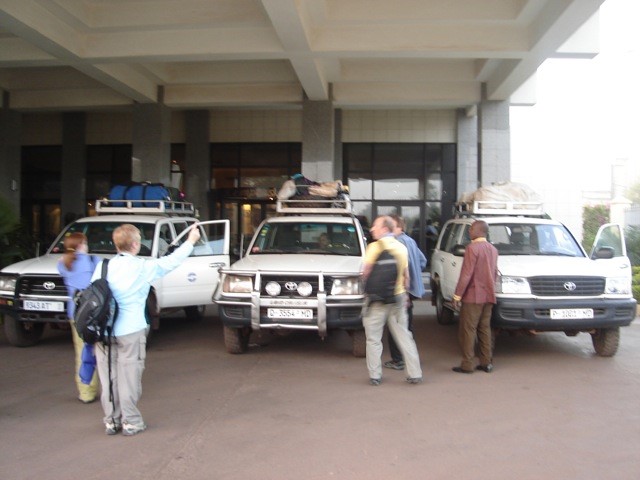
We never really got to the bottom of what was driving the problem. I did find out later that part of it had to do with the drivers who thought that the numbers that we’d placed on the vans corresponded to the actual order in which they were being asked to drive. For now, we simply switched the van numbers between #1 and #2, switched the equipment to #2 and waited for the next shoe to drop. But, alas, no one seemed to have a problem with that nor a shoe of that particular sort. Issa and his driver got the van they wanted and Valery seemed okay with it too.
The Van Switch and the Air Conditioner
After a bit more Marx brothers scrambling around, we were all in our respective places and ready to leave. As soon as we got into the vans to leave, those riding in van #2 (formally known as van #1) discovered that they had a broken air conditioning unit. So, switching the vans the way we did looked to some – especially those riding in #2 – that we’d made the last minute switch as a grab to get the working AC. We’ll never know the truth, but that helped explain why Issa didn’t want to go in the old #1 van.
Refueling and Second Guesses
Within seconds of pulling out, the driver in #3 announced on the walkie that he needed to stop at a gas station to fill up the vehicles. I glanced over to our gas gauge in #1 and saw that we were almost out as well. The driver in #2 couldn’t seem to get his walkie to work.
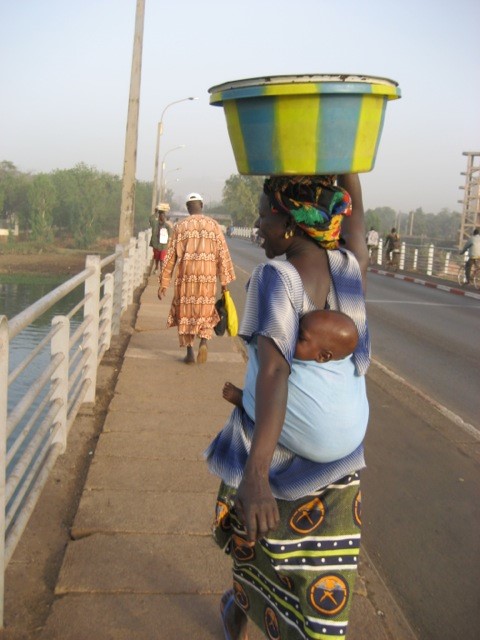
We stopped after 3 minutes on the other side of a long two lane bridge where there were lines of people walking to work carrying packages on their heads. Just the kind of shot I would have loved to have gotten. As nice as the shot was in the morning light, I didn’t want to hold up the whole caravan in these early moments of the shoot. But then we were stopping to fill-up. Maybe I could be quick about it.
When we= pulled into the gas station, Valery got out to oversee the fill up and I made a note to myself that filling up the vehicles should be the responsibility of the drivers and that they should take care of the vehicles in a way that minimized the involvement of everyone else whenever possible. I wrote it down as a reminder to bring it up later, preferring not to say anything at that moment lest it be interpreted as yet another of my critiques of Valery’s producing style.
Valery came back to the van and was rummaging thru her wallet for some money, sort of talking out loud to herself. “It cost $500 dollars to fill up each of these Land Cruisers with gas!”
“Wow. Something sounds wrong there.” I said, assuming she wanted some help. I was sure it must have been more like $50. One dollar was about 500 Malian Francs so I could imagine it sounded like a lot of money especially in French with all those zeroes. “Are you sure?” Surely she needed to rethink the math.
The simple act of having enough cash available for us to have on the road without having to go to banks constantly was surely something that Valery had handled under the guise of producer. No? It would never have occurred to me to have reminded her to bring enough money for all of us to survive on during the weeks we were going to be in this country. Enough for gas, for fixing broken vehicles unless that was the responsibility of the rental company that owned them, enough for food, for hotels, for tips, for briberies and for countless unknowns ahead of us… Thousands of dollars at minimum I would have assumed.
Of course, getting gas under these circumstances can be confusing: the language is French or some other unintelligible tongue, they are dealing in liters of gasoline not gallons and with three Land Cruisers that consume a lot of petrol and paying with foreign currency. This clearly wasn’t my area to tinker with. But Valery seemed upset and confused. I wanted to help. Holly seemed to be thinking about other things. Maybe the shot list
Cruisers and each one costs $500 to fill up? And with all deference to Valery’s distraught mood, she and Holly probably weren’t nearly distraught enough if this were going to be the state of gas in Mali. When you do a budget for a film, you sometimes don’t have time to research everything. Maybe the price of gas just slipped past them. Wow. This might prove to be seriously worse than the excess baggage fee back in LA.
I quickly did the math. At that rate for gas, filling up the three vehicles over the course of our many kilometers of expected travel on this month-long journey could add up to something like $30,000! Not exactly chump change for a documentary film. And not the kind of mistake you want to discover on day one of your film. Fingers crossed Valery and I were wrong.
As we were about to pull out of the gas station, Valery got a call on her phone. Her cellphone actually worked! Someone from the hotel called to say that the ‘extra’ car battery had been delivered and was waiting for us at the hotel. We’d have to go back to get it.
Valery had begun talking about buying this extra battery when we were still in Los Angeles but I never understood what having it would actually do for us except take up unnecessary space. Batteries dying in the vehicles seemed unlikely. Besides, we could always jump start a battery with one of the other vehicles.
Early on, I’d determined that this battery wasn’t going to be one of my battles. So, in keeping with not being part of that particular issue, I suggested that just van #3 and Valery should drive back to the hotel and I could take the time to get those shots that I was wanting to get on the bridge.
I pulled out the small camera that looks like a consumer video camera, hoping to be able to get some shots without calling attention to what I was doing just in case they might not like me filming them. (In Tamachek: “Hey there’s one of those guys from the mosque from yesterday!”) I never know how people will react to having their images filmed. We were down for a little time anyway waiting for the battery, so it was worth a try. If it went without incident, I could come back and get the bigger camera.
I got excited just striding out to the bridge with the camera under my arm. Laurent came with me with the smaller tripod. Hundreds of people were on the bridge walking in both directions. The light was still nice. I wasn’t sure what the shot might “mean” but it was worth something.
The Silent Soundman
Curiously, Val chose to stay in the vehicle. What motivated him was still a mystery to me. This is the kind of scene that soundmen usually really love: rich ambient sounds of people walking and shouting to each other and loud motorcycles and buses crossing the frame. Distant boat sounds. In my experience, any other soundman in the world would have been all over that moment. Maybe he missed the whole thing, deeply lost in his own thoughts. Or maybe he was just lazy.
I was definitely off my game for some reason. Getting beautiful shots is a process that can happen for mysterious reasons. Part instinct, part timing, definitely part luck. Partly, it’s a blessing from the Gods. Likewise, when shots don’t work, it can mean a lack of those blessings. A kind of bad shooter karma. I felt uncharacteristically jittery and out of sync. Ungrounded. I was seriously worried about Valery and Holly and their ability to make this film work. Usually, I could search around and with enough time find a few great shots whatever the circumstances and the satisfaction that would come from a beautiful shot discovered in a pinch would lift me out of almost any mood.
My growing annoyance with Val’s reluctance to share the moment with us increased my sense of confusion about him. It worried me a lot that he’d worked almost exclusively on movies for TV with nothing on his resume indicating he’d worked on documentaries. Those two kinds of projects are worlds apart. Maybe he was waiting for a call sheet in the morning from production with a memo about getting shots from the bridge on the way out of town.
From the start, Val seemed to have some kind of a defensive wall around him that made him prickly to approach. His overall appearance and the curt quality of his speech made him appear slightly annoyed most of the time. But exactly with what, I hadn’t a clue. Life in general? Something he learned in soundman school perhaps. Just watch him and Issa hit it off.
I was beginning to feel isolated what with Val and Issa, Valery and Holly making up the majority of our crew. The road ahead of us was lined with such a potentially wonderful and dramatic story. This project offered us all a chance to learn something very new about a distant part of the world and its people and the basic tenants of Islam. But if we were going to bring a good film home with us at the end of this journey, we would need a cohesive team to start pulling together as one.
When It’s Working Right
These films are indeed journeys within the journey: we start out every day with something in mind and invariably the situation shifts. And we have to all be in sync to make that shift together. It is one of the most satisfying aspects of filmmaking imaginable – when it’s working right.
I made a mental note to myself to see what was wrong with the third walkie.
Trust in Allah but Tie Your Camel
Old Sufi saying…
That’s a Sufi saying I’ve always loved. It’s one of those deceptively simple lines that holds a universe inside it. Faith and responsibility. Belief and pragmatism. The women in this project were heavy on the first part, light on the second. They trusted completely – trusted the dream, the signs, the timing, the man who called himself Issa. I admired their conviction, even envied it sometimes. But filmmaking doesn’t run on miracles. It runs on batteries, release forms, and the occasional seatbelt.
The way Holly told it, the whole thing began in her bathtub. One night, she’d taken a long soak – candles lit, music low, the kind of rare quiet that loosens the knots in your mind. As she drifted, she had a vision of traveling somewhere she’d never been, on a journey that felt both mysterious and necessary. Later, she dreamed of finding something precious that was about to disappear. The next morning, scrolling the internet in that post-dream haze, she stumbled across a website devoted to saving Mali’s endangered manuscripts. It belonged to a man named Issa. The coincidence hit her like a sign. She was sure her dream had led her there – sure this was her purpose.
While I’m not necessarily a big soak-in-the-tub kind of guy, I completely understood. I’d read Blink, the book about intuition, and I’ve spent a lot of time exploring those quiet channels between logic and chance. I started with Transcendental Meditation, drifted through others, and even learned Tai Chi from a Chinese master back in the ’60s. I still do “the form” now and then, mostly to remind myself that stillness can reveal things movement never will. So when she talked about her dream, I didn’t roll my eyes. I’ve known those moments when an image or impulse appears out of nowhere and insists on being followed.
In some ways, Holly made a good choice bringing me on board. I was built for that kind of territory. Being an old hippie, I’m comfortable around big ideas, visions, and leaps of faith. I like to think I carry a healthy skepticism toward the mystical, but I’m far from closed to it. The women probably sensed that. I’d have hired me too. Let’s face it—it was supposed to be.
But there’s that camel. Somewhere along the way, the dream that launched the project became its operating system. Trust took the place of planning, faith crowded out craft, and the camel was left untied in the sun. The project didn’t fail for lack of belief – it collapsed under the weight of too much of it. And I learned, once again, that in filmmaking as in life, you can trust the journey, but you still have to hold the rope.
In the months that followed, I thought often about that saying. About how easily faith can blur into denial, and how even good intentions can drift off course when no one’s steering. I don’t regret saying yes to Mali. The lessons were real, the images still alive somewhere on a hard drive, and the experience – however fractured -remains its own kind of story. Maybe that’s what “meant to be” really means: not success or failure, but the path you take in learning the difference between the two.